

Blog
Why do puppies always tilt their heads at you?

When you ask your puppy if he wants to go play, you'll likely get a curious head tilt in response before he happily runs over and plops down on your lap with his two furry front paws.
It’s so cute when a puppy tilts its head to look at you, but have you ever wondered what the reason behind it is?
The more it wants to see and hear you clearly,
the harder it tilts its head.
The position of the eyes, the length of the nose, and the shape of the ears may all affect a puppy's perception of its surroundings.
The puppy will constantly scan your face to get information and read your emotional state. One reason it tilts its head when you talk to it may be that it wants to see your face more clearly, especially your eyes, to compensate for the partial vision blocked by its long nose and mouth.
Try holding your fist in front of your nose as shown in the picture below. You will then be able to see the world through a long nose, just like a real puppy. If you look at your companion, you will find that your vision is partially blocked by the long nose, and your ability to see the full face of your companion is also limited.
It's natural that if you want to see clearly, you will tilt your head unconsciously, right?
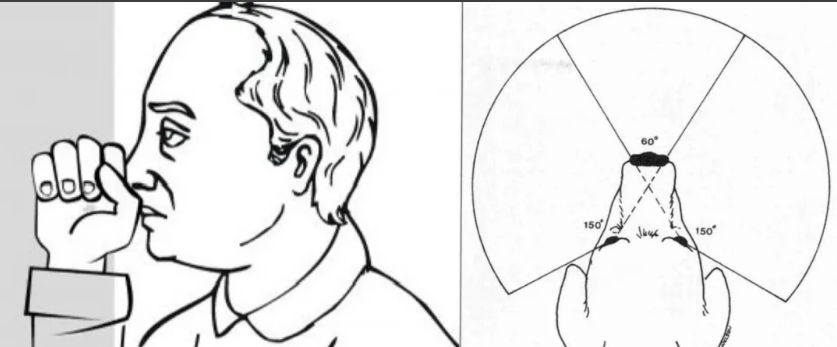
- A dog's muzzle blocks their view of the lower part of the human face they are trying to see, which is one of the factors that causes dogs to tilt their heads when we talk to them. / Left Right (Monocular and binocular visual fields of a typical medium-sized head dog)
Moreover, puppies are not as good as humans in seeing close objects, and they turn their heads to "focus".
Human eyes are located in the front of the face, and the retina has a fovea, which is a concentration of photoreceptors. This ensures that objects in front of the eyes are clear and focused.[6] Puppies are different. Their eyes are located on the sides of their heads, which gives them a wider horizontal field of vision. They do not have a fovea, but only a similar central area, but this area has fewer photoreceptors, resulting in unclear vision of close objects. This is also the reason why puppies often fail to notice small objects 25 to 50 cm in front of their noses.

So, you don't need to be confused if your puppy can't find the toy it almost stepped on. It really can't see clearly, and it may not notice the location of the toy unless it takes a step back.

Puppies like eye contact. If they approach you but fail to catch your eye, they may walk away and then come back with a shoe or something else they are not allowed to hold. They are trying to get your attention.
Tilting the head also helps puppies better locate the source of the sound. A dog’s ear canal is “L” shaped, which protects the auditory organs from damage. Their hearing is very sensitive (four times that of humans) and they can hear subtle sounds that humans cannot hear. However, a lot of noise in the environment will interfere with their accurate positioning of the sound source.
Research shows that humans have a relatively accurate sense of direction in locating a sound source, with an error of 1 to 2 degrees. In laboratory conditions, dogs can only locate the source of a sound with an error of 4 to 8 degrees. In the wild, when a sound comes from 300 meters away, the error in their locating the source increases to around 20 degrees .

The most important function of sound localization is to guide the eyes toward the sound source. However, some dogs can hunt without relying on vision (for example, pouncing on prey through deep snow because dogs have a very strong sense of smell) / Tuchong Creative。
When a puppy tilts its head, it adjusts its outer ear, or pinna, to better direct sound waves toward its inner ear. This can improve hearing sensitivity by about 28 decibels, allowing it to better locate the source of a sound and determine its distance. Puppies with floppy ears are more likely to tilt their heads to improve their auditory perception because their thick ear flaps can block sound.
But please be careful. If the puppy's head is tilted abnormally, or if it exhibits symptoms such as uncoordinated limb movements, swelling in the neck, or pain when touched, it may be suffering from a cervical or paravertebral disease and needs to seek medical attention promptly.
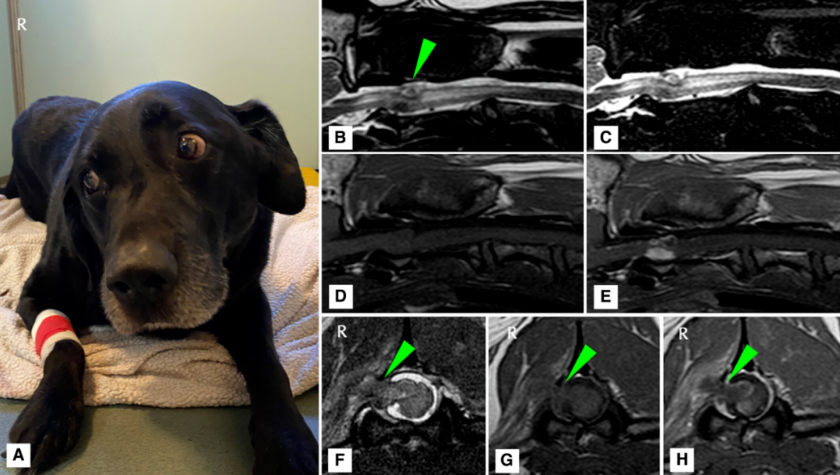
This is a puppy diagnosed with a spinal nerve root mass and right head tilt. Its MRI showed a tubular mass that invaded the spinal medulla along the right spinal nerve, causing significant spinal cord compression.
Hungarian animal cognition researchers pointed out that puppies may also use head tilting to help sort out and remember the information they receive, just like humans often tilt their heads to one side when recalling something, and then the image of the thing appears in their mind.
It watches and thinks,
and always tries to understand you.
In fact, your puppy may know you better than you know it.
A puppy is a perfect “snooper” and “eavesdropper” who never offends you. It silently observes your every move, knows your whereabouts, and is familiar with your living habits: whether you sing in the shower, how long you sit in front of the TV. It knows who you sleep with, what you eat, and which foods you eat excessively.
For a puppy so sensitive to eye contact, whether your head is raised, tilted, turned away or toward it can make a huge difference. Even the slightest movement of your hand or the slightest adjustment of your body will catch its attention.
If you’ve been staring at your computer screen for three hours straight, your hands glued to the keyboard, and then suddenly look up and stretch your arms overhead, you’re practically “deformed”! The shift in your attention is obvious—an expectant puppy could easily interpret it as the beginning of a walk.
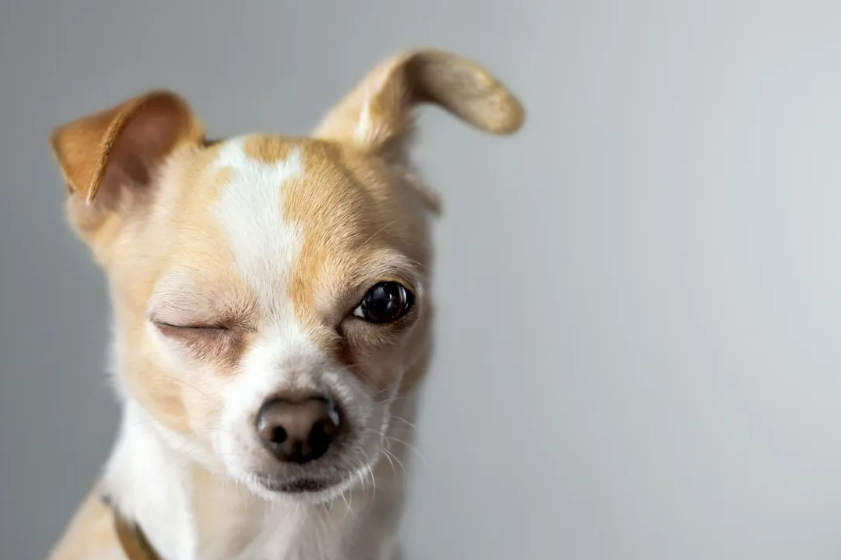
In order to predict you, the puppy has been silently familiar with your typical movements。
Furthermore, puppies are capable of recognizing their owners’ emotions. A study from Japan compared the reactions of puppies to their owners watching happy and sad movies, observing whether the puppies’ behavior changed with their owners’ emotional states. The results showed that when their owners watched happy movies, the puppies stared at their owners longer than when their owners watched sad movies, indicating that they were sensitive to their owners’ emotional states.
Studies have found that puppies tend to tilt their heads to the left when observing you. They will first observe your right face and can recognize smiling faces.For example, when watching short videos, you will often see that when an owner criticizes a puppy that has chewed furniture, he will stop and turn his head to face his face, but he will quickly lower his head to avoid eye contact with you. If you are angry, he will not dare to look at you.
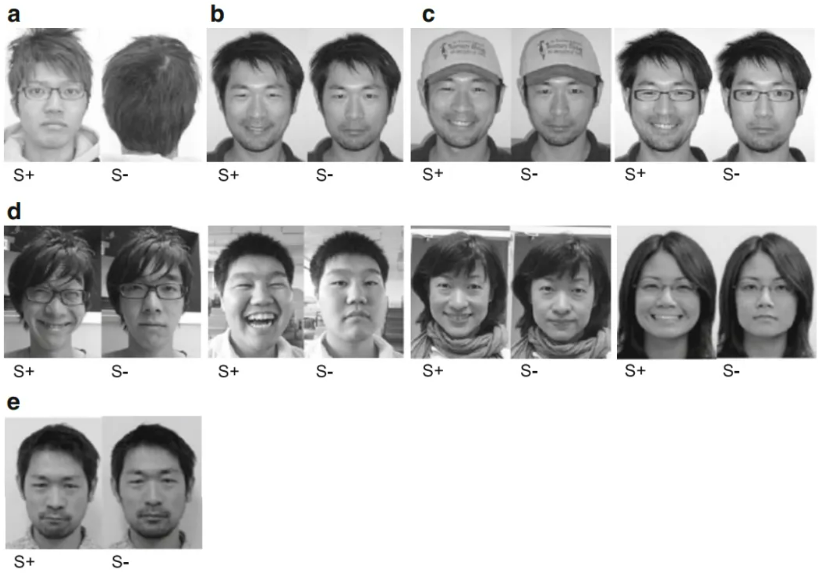
Researchers at Azabu University in Japan found through experiments that dogs can significantly distinguish (by touching photos with their noses) between their owners' smiles and blank expressions (they are rewarded for choosing the right smile), but dogs are not as accurate in responding to smiles from strangers of different genders as they are to their owners.
Some animal behaviorists also believe that tilting the head is a sign that the puppy is actively listening and processing information.
Through voice and intonation,
it actually understands what you're saying.
Puppies and humans have been companions for approximately 18,000 to 32,000 years, sharing a similar social environment. The sounds made by puppies and humans are familiar to both.Puppies' ears are particularly sensitive to certain sounds, such as the "crackling" sound made when you tear open a bag of potato chips.
Puppies are more likely to respond to high-pitched, repetitive calls than to low-pitched ones, in part because the language allows them to distinguish words spoken specifically to them from the constant chatter overhead.
If a puppy hears you crying softly, it will rush to support you, even if you are a stranger. It will sniff you, touch you, and lick you with its tongue.
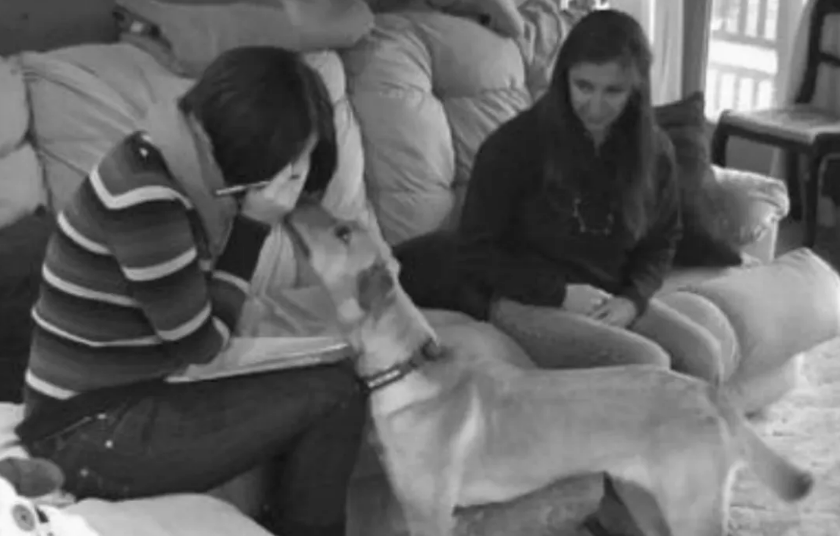
A dog comforts a "stranger" (experimenter) who pretends to cry, with its owner next to it.
There is evidence that the brains of puppies are lateralized in processing human vocalizations. Puppies are more likely to turn their heads to the right (controlled by the left hemisphere) in response to familiar commands, while they tend to turn their heads to the left (controlled by the right hemisphere) in response to artificial, meaningless stimuli such as whistles .
Just like you when you were taking the Level 4 or Level 6 listening test, your puppy will pick out key words. When it hears a familiar word, it will give you a cute “head tilt”. For example, if you say to it, “It’s a nice day today, it won’t rain, so you don’t need an umbrella to go out and play,” your puppy will listen carefully and hear “XX, XX, “go out and play,” XX.” Then, it will respond by tilting its head and quickly running to your feet, ready to go.
It understands you very well. The more positive feedback you give it, the more it will cooperate with you. For example, if it tilts its head, you will be amused and laugh, praise it for being cute, or reward it with snacks. This will make it more likely to repeat the head tilting behavior.
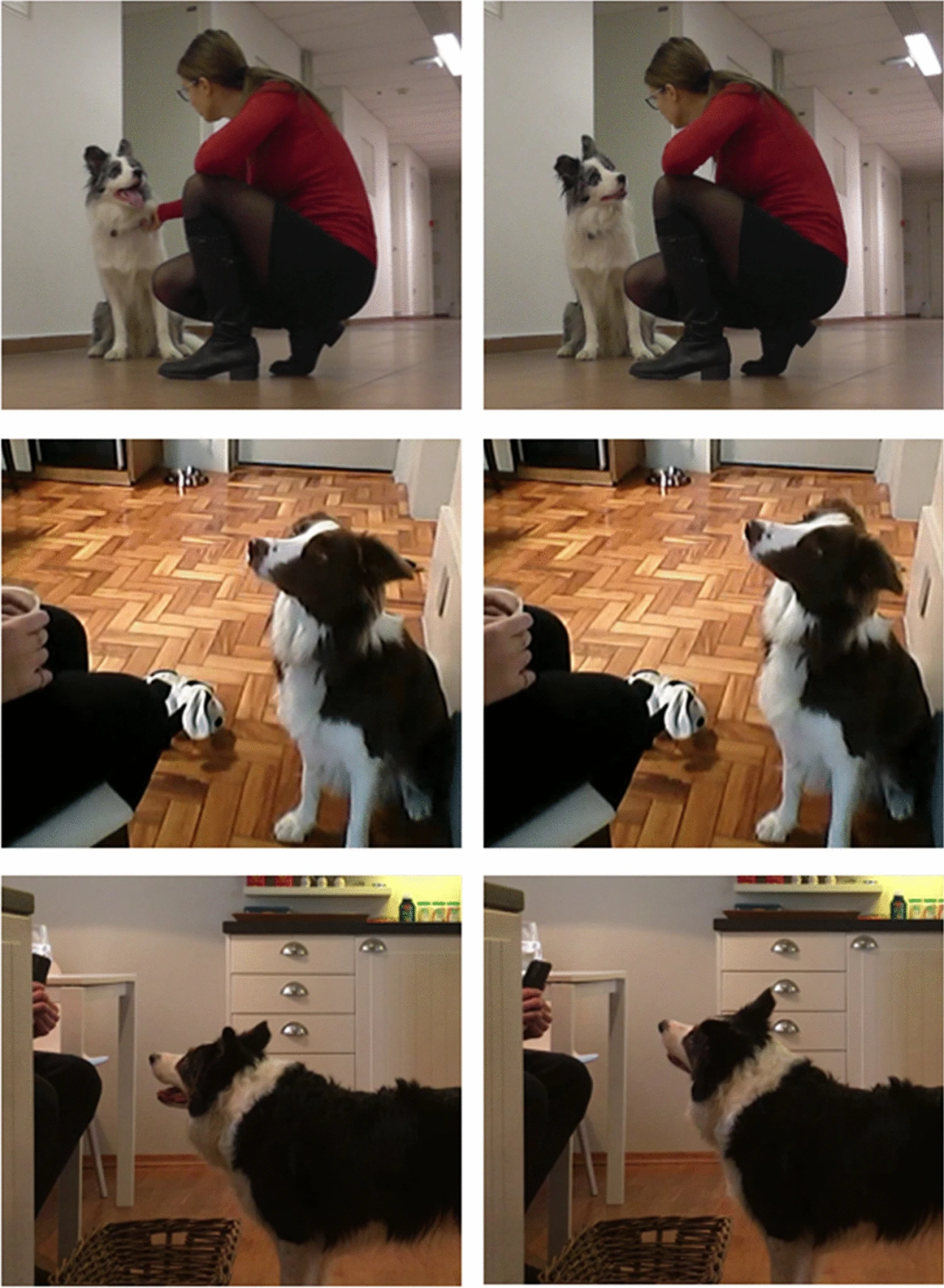
In 2022, a Hungarian experiment on dog head tilt showed that dogs that learned object labels tilted their heads more frequently than normal dogs when they heard the name of a toy.
So, next time your puppy tilts its head towards you, remember to praise it, because it is really trying hard to understand you.


